


Business Systems That Remove Friction, Not Add Complexity
Technology should simplify how a business runs, not introduce another collection of passwords and disconnected tools. INNO Digital Solutions connects AI communication, CRM, automation, search visibility and marketing infrastructure into practical systems built around how a business attracts, serves and grows its customers.
One Connected Operating System
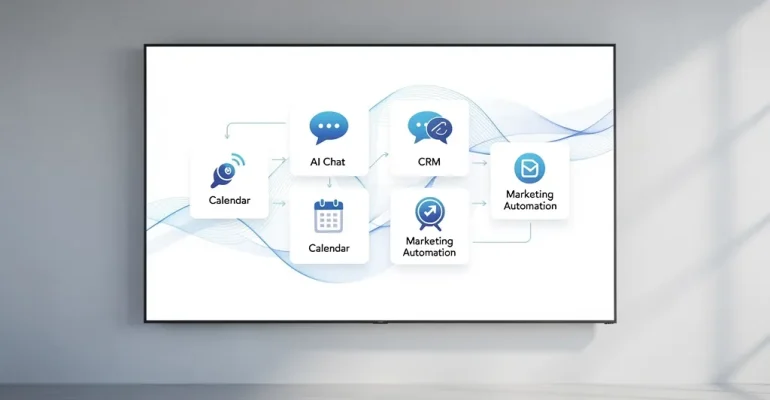
Rather than treating each tool as its own island, INNO links the pieces that already touch the customer journey, landing pages, forms, calendars, tracking and websites, into a single operating system. Information moves between these components automatically, so a lead captured on a landing page can trigger a follow-up sequence, update a calendar and appear in the CRM without anyone re-entering data by hand.
This connected approach means a business can see the full picture of a customer relationship in one place, from first inquiry through to repeat business, instead of piecing it together across spreadsheets, inboxes and separate platforms. It also means the business is not locked into any single tool: as needs change, individual pieces can be swapped or upgraded without rebuilding the whole system, because the connections between them, not the tools themselves, are what INNO designs around.
For a business owner, this translates into fewer dropped threads. A customer who calls, fills out a form, and later books an appointment shows up as one continuous record rather than three disconnected events, which makes every follow-up more informed and every handoff between staff smoother.
Start With the Bottleneck

The right starting point is not the most advanced technology available, it’s the place where the business is actually losing time, visibility, leads or information. INNO begins by asking where that friction shows up, then builds the system around solving it.
Depending on what the business needs, that might mean deploying a single focused solution, such as an automated response to missed calls, or connecting multiple capabilities into a broader digital environment that spans communication, CRM, automation and marketing. Either way, the system grows from a real operational problem rather than a generic template.
How a Typical Rollout Comes Together

When a business engages INNO Digital Solutions, the process starts with a working audit of how calls, messages, forms and leads currently move through the organization. That audit surfaces where information gets lost, where responses lag and where staff time goes to manual, repeatable tasks.
From there, INNO maps a rollout in phases rather than deploying everything at once. An early phase might automate missed-call text-back and lead routing, while a later phase connects scheduling, review requests and reporting into the same system. Each phase is tested against real activity before the next one builds on it, so the business always understands what changed and why.
This phased approach keeps the system aligned with the people using it. Staff are trained as new pieces go live, feedback shapes the next phase, and the business retains visibility into what is automated versus what still needs a human decision.
Why Integration Matters

Connecting tools well reduces duplicate data entry, missed handoffs between teams and repetitive manual work. But consolidation is not automatically the right answer for every business. INNO evaluates what should be brought together, what should stay specialized, and how the different components need to exchange information so the architecture actually fits how the business operates.
Some businesses are better served by a lean set of tightly integrated tools, while others need to keep a specialized platform, such as an industry-specific booking system, separate while still feeding data into the broader system. The goal is never integration for its own sake. It’s making sure information reaches the people and processes that need it, when they need it, without adding a new layer of complexity on top of the old one.
Frequently Asked Questions
What tasks can realistically be automated?
Common opportunities include lead capture, inquiry responses, qualification, appointment reminders, follow-up sequences, pipeline updates, review requests, internal notifications and recurring administrative tasks. The right automation depends on the specific business process and the exceptions that still require a person.
Can different communication channels work together?
Yes. The strongest systems pass useful information between channels so a conversation can create or update a contact, trigger a workflow, schedule an appointment and give the team visibility into what happened.
Is combining everything into one platform always the best approach?
Not automatically. Integration can reduce duplicate data, missed handoffs and manual work, but one giant platform isn’t inherently better. INNO evaluates what should be consolidated, what should remain specialized, and how the components should exchange data.
Can a business start small and expand later?
Yes. A sensible architecture can begin with a single high-value problem, such as missed calls, lead follow-up or search visibility, and expand as the workflow proves useful.
How do we know if a process is worth automating?
Map the current process first. Measure the frequency, manual steps, delays, error points and business value. Automation is worthwhile when it removes meaningful repetition or improves consistency without creating more complexity than it solves.